
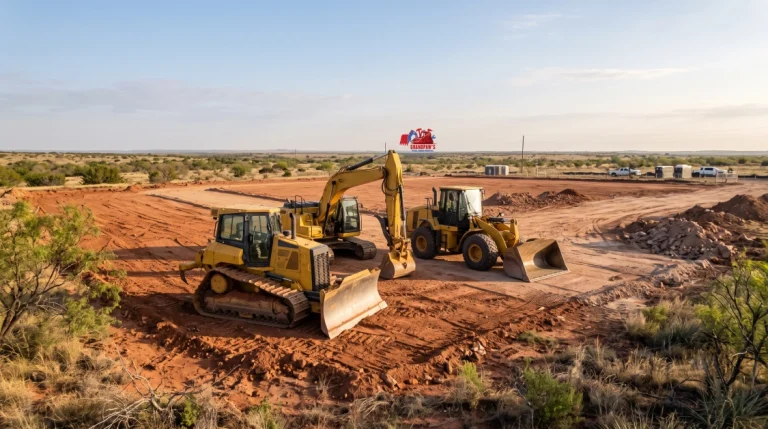
Major earthmoving projects, site clearing, agricultural development, and commercial infrastructure demand dependable heavy iron with the horsepower and hydraulic capacity to handle North Central Texas terrain. From tight residential utility trenches to broad multi-acre site balancing, renting production-class machinery eliminates capital depreciation, ongoing fleet maintenance overhead, and idle yard expenses. Securing the right excavators, backhoes, bulldozers, and wheel loaders through a regional equipment partner ensures your project stays on schedule without unexpected equipment downtime.
Grandpaw’s Tool Shed has supplied trade contractors, earthmovers, ranchers, and municipal crews with dependable heavy machinery across Eastland County, Abilene, Weatherford, and Breckenridge since 1990.
How Do You Select the Right Excavator Size for Your Jobsite?
Excavator selection depends on your required digging depth, breakout force, reach, and the physical swing clearance available on the jobsite. Undersized units cause cycle delays and risk hydraulic strain, while oversized machines damage finished grades and increase mobilization costs.
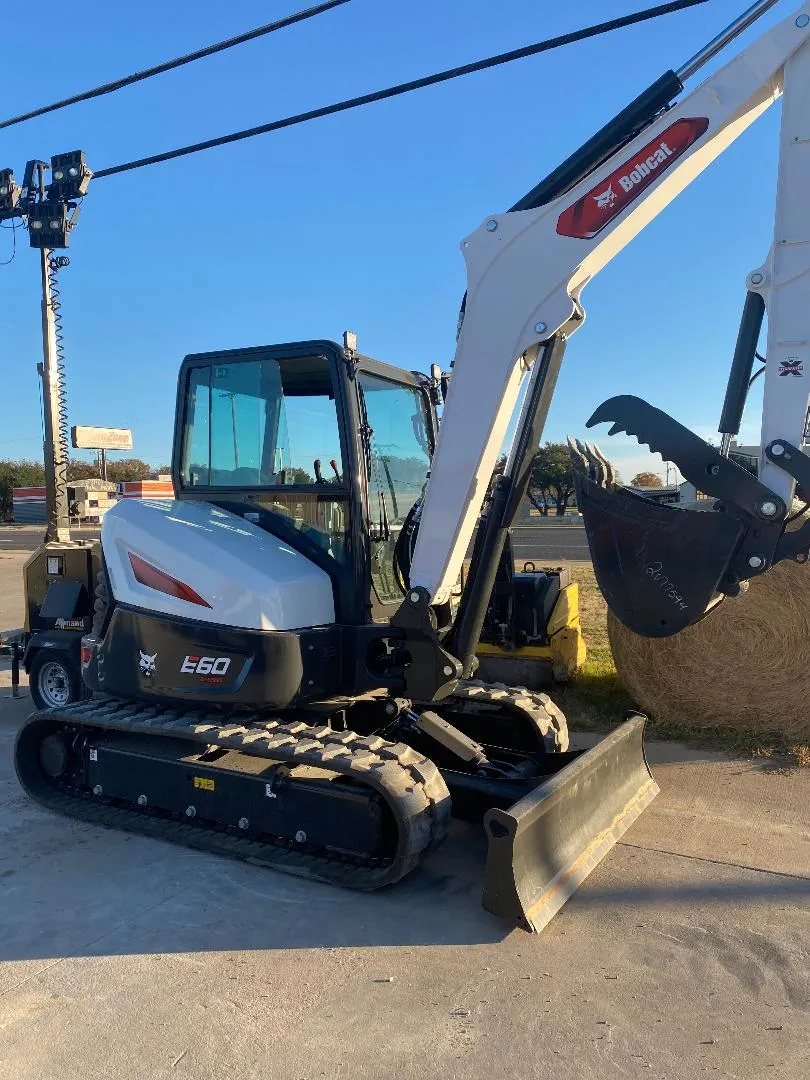
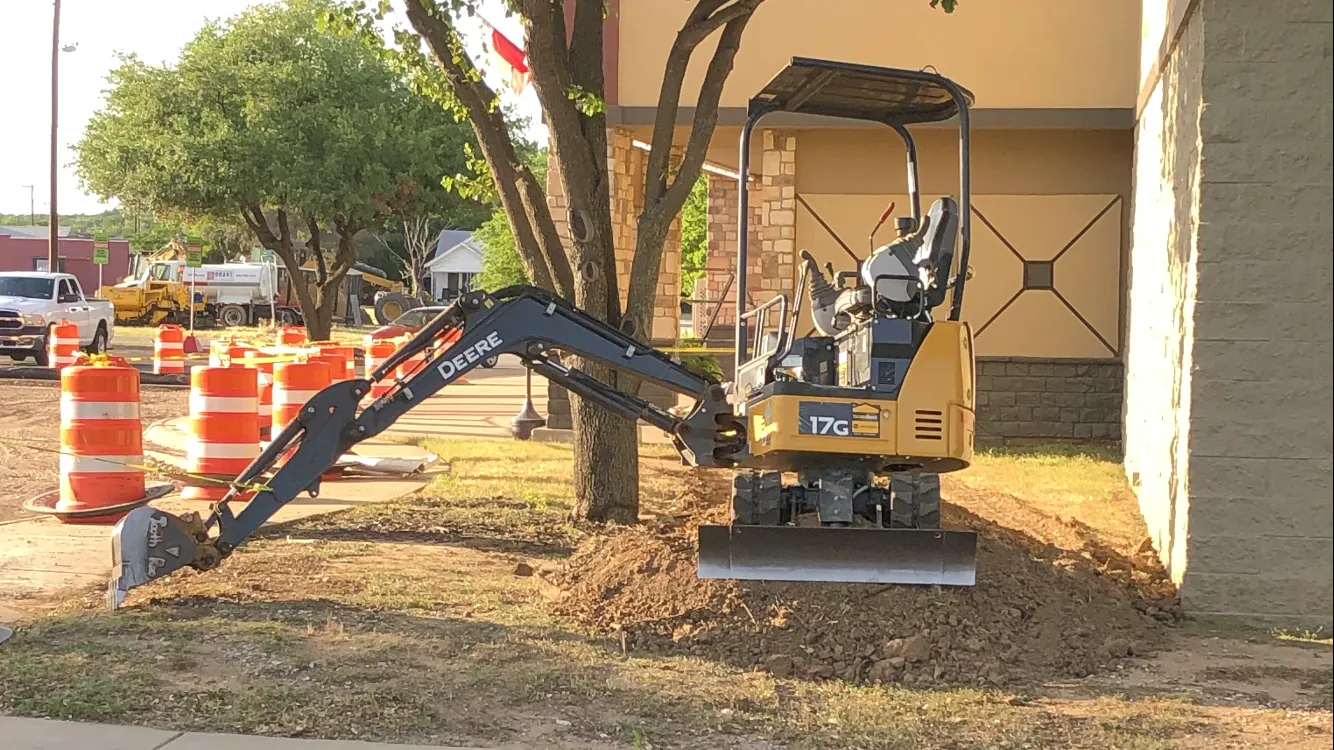
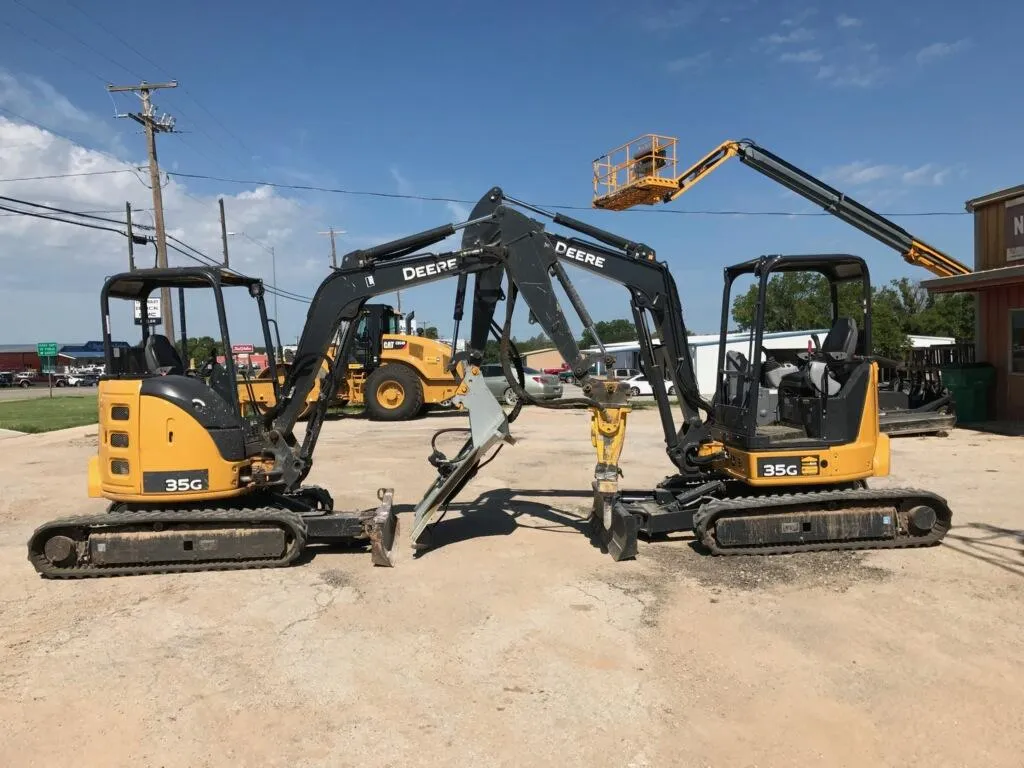
Compact excavators excel in confined footprints, residential perimeters, and agricultural fence-line trenching. The John Deere 17G mini excavator provides compact access for tight gates and foundation work. Moving up in displacement, the John Deere 35G and the John Deere 35P with thumb attachment allow operators to dig footing trenches and grab broken concrete, boulders, or fallen timber cleanly. For heavier trench box work and mid-sized utility runs, the Bobcat E60 delivers enhanced hydraulic flow and tractive force.
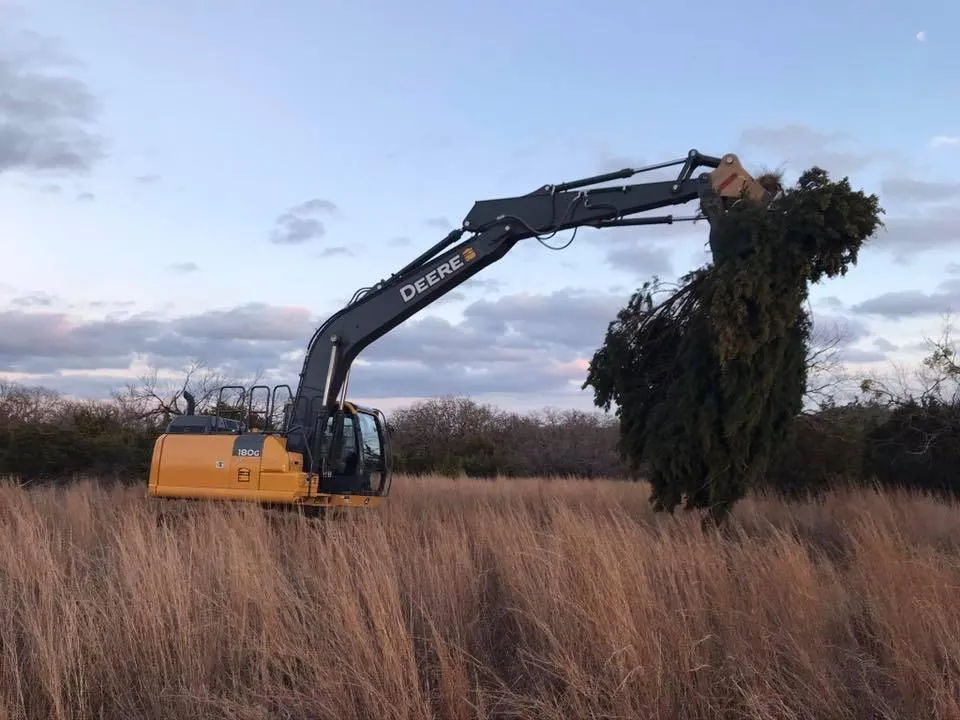
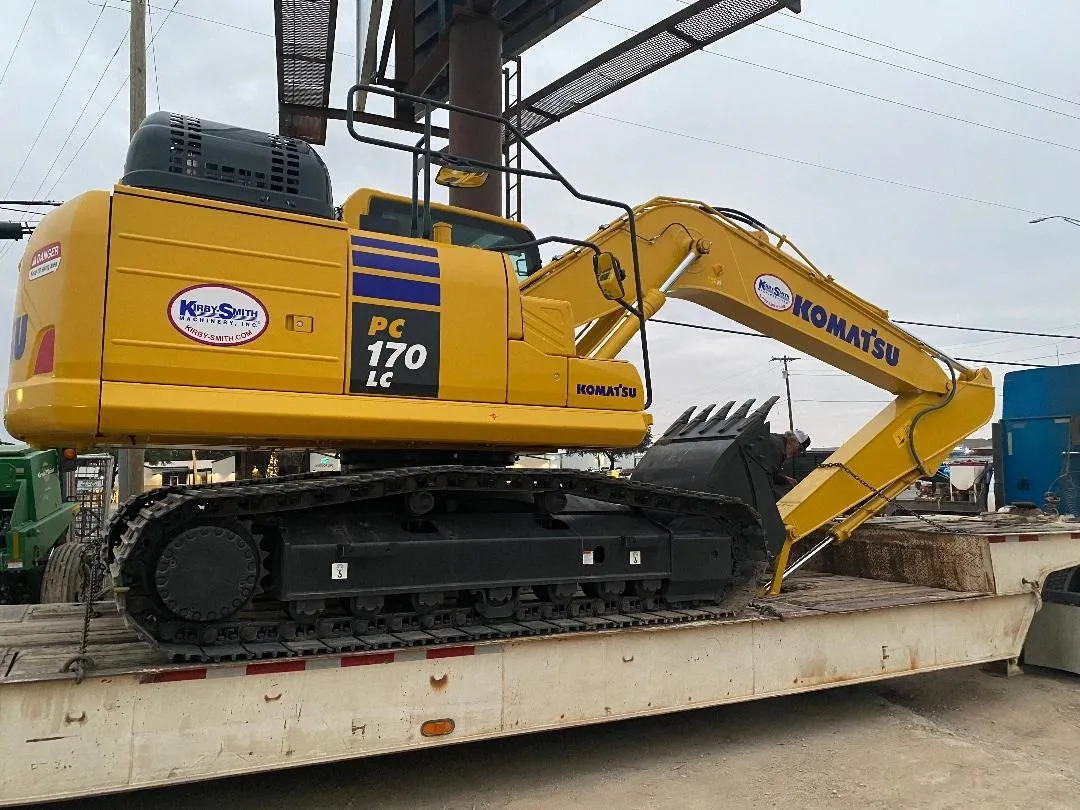
When your scope expands to massive earth cuts, road construction, and deep municipal utility installations, production-class excavators become essential. Machines like the John Deere 180GLC and the Komatsu 170 provide the heavy counterweight balance, reach, and bucket capacity needed to cycle mass spoils efficiently. You can evaluate weight classes and attachment choices through our local excavator rental options to match your project specifications.
Excavator Rentals

When Should You Rent a Dozer Versus a Wheel Loader for Earthmoving?
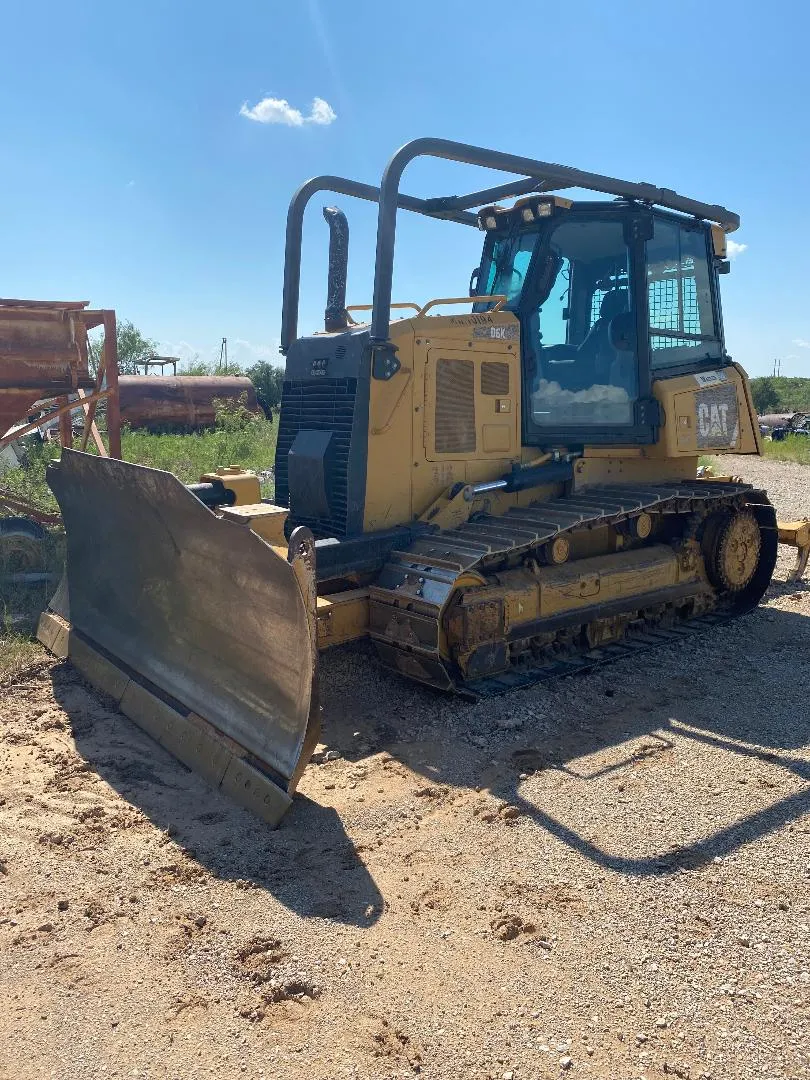
Bulldozers are designed to cut, pioneer rough grade, and push heavy material across uneven terrain, while wheel loaders are built to scoop, carry, and cycle loose bulk material rapidly. Using a track dozer for load-and-carry tasks accelerates undercarriage wear, whereas running a wheel loader across uncompacted, muddy rough ground causes wheel spin and poor traction.
| Machine Model | Category | Running Gear | Primary Operating Application |
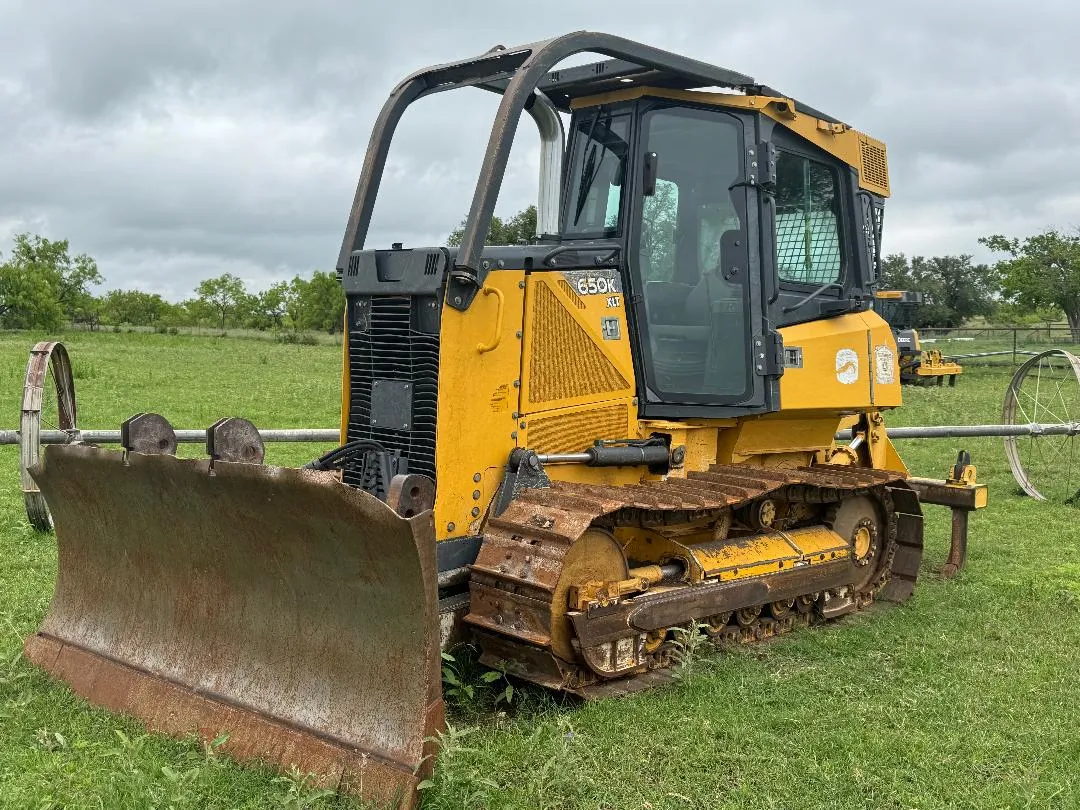
| Dozer 650 | Bulldozer | Steel Tracks | Precision finish grading, residential pads, pasture clearing |
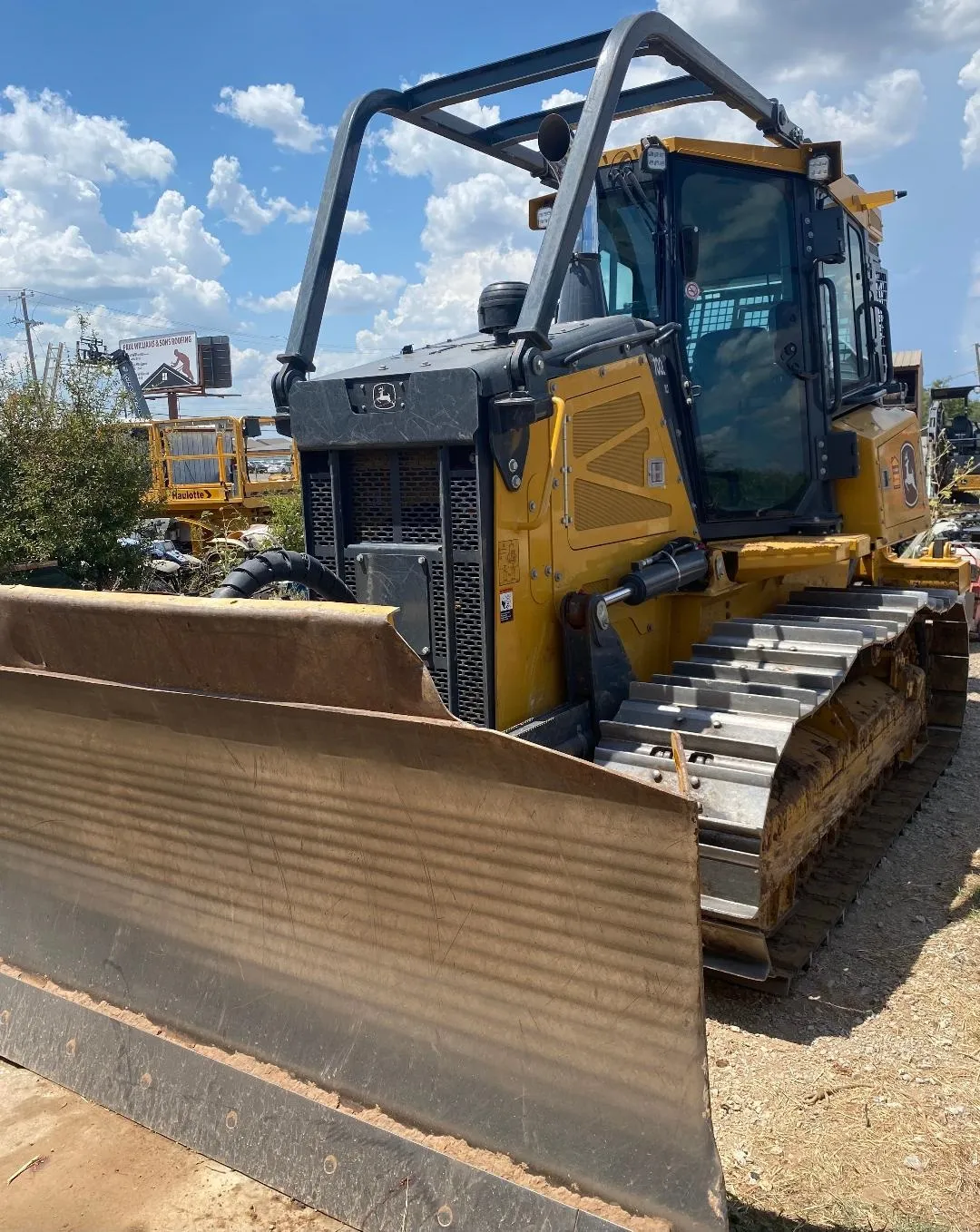
| Dozer 700L | Bulldozer | Steel Tracks | Medium earthmoving, commercial site leveling, subgrade work |
| Dozer D-6 | Bulldozer | Steel Tracks | Heavy mass clearing, ranch tank builds, bulk cut-and-fill |
| Wheel Loader 624P | Wheel Loader | Articulated Pneumatic Tires | Aggregate loading, stockpile cycling, rapid haul truck loading |
Our fleet of bulldozer rentals provides track-driven stability for tough pushing conditions:
- The 650 dozer provides agility for fine grading, swale contouring, and building residential house pads.
- The 700L dozer delivers higher tractive effort for commercial pad leveling and medium-scale clearing.
- The D-6 dozer supplies the drawbar pull needed to pioneer raw brush, dig stock ponds, and cut hard clay subgrades.
For high-speed bulk material handling and charging batch plants, a wheel loader rental featuring the 624P wheel loader provides high-capacity bucket cycling, reliable reach over truck sideboards, and smooth roading between aggregate stockpiles.
Dozer Rentals
What Makes a Backhoe the Most Versatile Dual-Purpose Utility Machine?
A backhoe loader combines front-end loading capability with rear trenching capacity on a single mobile, roadable platform. Unlike dedicated tracked excavators that require a transport trailer for short transitions between work zones, a rubber-tired backhoe moves independently across finished roads without damaging asphalt or concrete.
The Kubota M62 backhoe delivers industrial performance in a compact utility footprint. It features an integrated front loader for backfilling trenches, spreading base material, and lifting pallets, combined with a powerful rear backhoe arm for excavating utility lines and drainage channels. For municipalities, plumbing contractors, and rural property owners, the M62 handles multiple phases of site preparation without the expense of mobilizing two separate machines.
How Do Support Machines and Hauling Units Streamline Jobsite Productivity?
Mass excavation requires a synchronized cycle of material transport, dust suppression, vegetative clearing, and roadway cleanup to keep production lines operating safely. Leaving raw material stockpiled at the trench line causes congestion, limits swing radius, and slows down cycle times for operators.
Material Transport and Aggregate Hauling
Moving spoils offsite or importing select fill, flex base, and topsoil requires dedicated hauling capacity. Renting a 6-yard dump truck through our dump truck rental service gives contractors self-sufficient aggregate transport, eliminating reliance on third-party freight haulers for regional jobsite logistics.
Compaction Moisture and Environmental Dust Control
Dry soil and high winds across North Central Texas create severe visibility hazards and prevent proper subbase soil compaction. Deploying a 2,000-gallon water truck via water truck rentals provides high-volume spray bar coverage for haul road dust suppression, base moisture conditioning, and post-demolition wetting.
Land Clearing, Mowing, and Pavement Maintenance
Preparing a site for development often requires clearing woody vegetation and keeping haul routes clean:
- The Bandit 12-inch wood chipper processes fallen timber, brush piles, and land-clearing debris into manageable mulch on site.
- Utility tractors such as the Kubota MX5400 HSTC and the John Deere 6115M provide PTO power for batwing mowing, pasture shredding, and general ground maintenance.
- A rotary diesel broom sweeper cleans tracking mud, aggregate spills, and dust off highway tie-ins and paved jobsite access roads to meet local stormwater and highway safety mandates.
What Are the Operational Benefits of Renting Heavy Equipment from Grandpaw’s Tool Shed?
Renting production equipment from a local partner protects your operating margins, optimizes machine utilization, and delivers immediate access to maintained fleets with local technical support. Investing capital into heavy machinery locks up borrowing capacity and exposes your balance sheet to interest rates, storage overhead, and machinery depreciation.
Renting transfers regular service, mechanical repairs, and routine maintenance responsibilities to our experienced team. Grandpaw’s Tool Shed maintains a strict preventative maintenance program, verifying track tension, hydraulic pressures, engine filtration, and safety systems before every dispatch. If a mechanical issue occurs on the job, our mobile field service technicians respond promptly with on-site repairs or rapid equipment exchanges to keep your crew productive.
Frequently Asked Questions
What areas does Grandpaw’s Tool Shed serve for heavy equipment delivery?
Grandpaw’s Tool Shed provides dependable equipment delivery across Eastland, Abilene, Weatherford, Breckenridge, and surrounding communities throughout North Central Texas, typically operating within a 50-mile radius of our Eastland facility. Delivery fees are calculated based on jobsite distance and transport trailer requirements.
What is the advantage of renting a mini excavator with a thumb attachment?
A factory thumb attachment allows the mini excavator to clamp, lift, and place irregular objects such as boulders, logs, demolition debris, and concrete slabs with secure control. This transforms the excavator from a standard trenching machine into an efficient material handling and land clearing unit.
How are equipment rental rates structured for heavy equipment?
Rental rates at Grandpaw’s Tool Shed are structured around a 4-hour minimum, a 24-hour daily rate, a 7-day weekly rate, and a 28-day monthly billing cycle. Discounted rates apply to long-term commercial projects, and billing begins when you take possession of the equipment.
What happens if a rented machine experiences mechanical trouble on site?
If an equipment malfunction occurs during normal operation, contact our office immediately for prompt support. Our team will arrange rapid on-site field repairs or dispatch a replacement machine to minimize downtime, at no extra cost, provided the issue did not stem from equipment misuse.
Is an equipment damage waiver required when renting heavy machinery?
A damage waiver is offered at the time of contract execution to reduce your financial exposure in the event of accidental equipment damage. Commercial liability insurance covering the equipment operator is handled separately and may be required depending on the machine class and project requirements.
